



The context engine for reliable AI-driven data engineering
The Data Knowledge Graph provides essential context — lineage, business logic, usage, and ontology via MCP — so your coding agents actually understand your data.
AI agents are only as reliable as the context they have
Every data engineering task requires deep understanding of the data, infrastructure, code, and business semantics around it. Gathering this context manually is impractical — and without it, even the best AI agents produce unreliable results.
Pipeline complexity
Data flows through dozens of transformations across multiple systems — no agent can understand the full picture without a structured graph.
Siloed knowledge
Critical business logic lives in undocumented SQL, tribal knowledge, Slack threads, and the minds of individual engineers — scattered across tools with no single source of truth.
Constant change
Schemas evolve, volumes spike, distributions shift — static documentation is instantly stale.
Conflicting definitions
Multiple metric and entity definitions exist in parallel, and the correct choice depends on the use case.

Your data ecosystem, understood
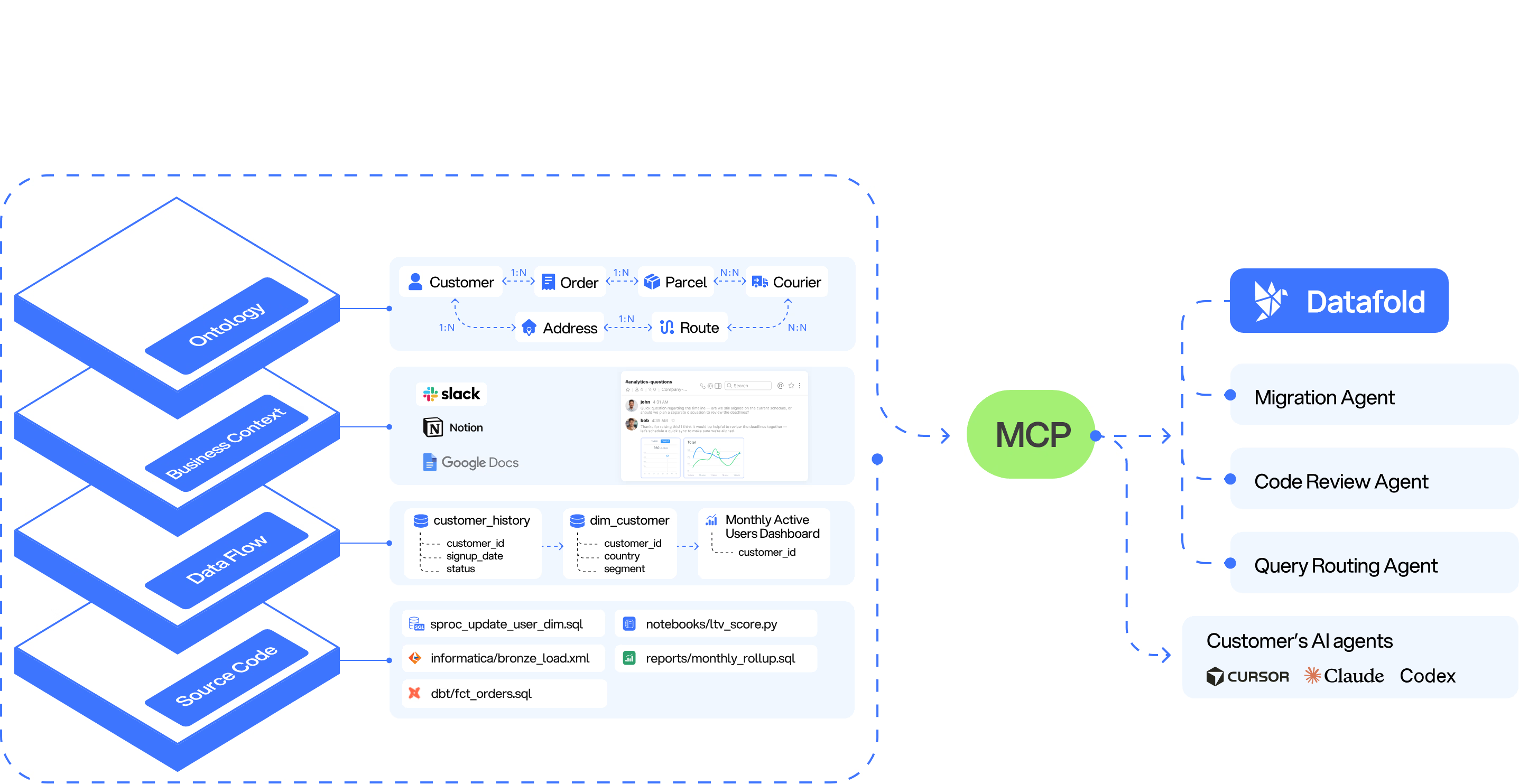
The Data Knowledge Graph automatically collects and unifies context across your data, pipelines, and analytical products — then serves it to AI agents via MCP, so every task starts with the full picture.
Unlike data catalogs that rely on human curation, the Data Knowledge Graph is built and maintained by AI — and optimized for consumption by any MCP-compatible agent.
Four layers of knowledge
Ontology
Automatically derives the business entities in your organization, how they relate, and which datasets describe them. Your agents understand your domain — not just your tables.
Business Context
Ingests documentation, Slack conversations, Notion pages, and other unstructured sources to capture the business logic, definitions, and tribal knowledge that never makes it into code comments.

Data Flow
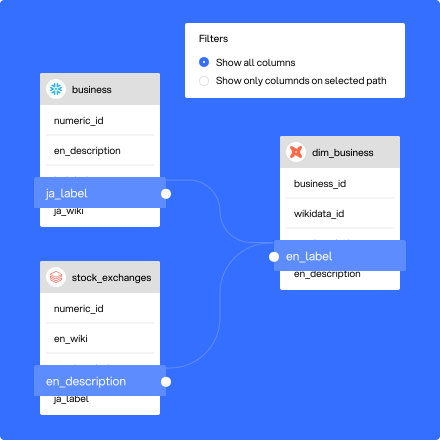
Maps column-level lineage across your entire stack — from source tables through transformations to BI dashboards and reverse ETL syncs. Every dependency is traced so agents know what upstream changes will break downstream.
Source Code
Indexes SQL, dbt models, stored procedures, and pipeline definitions across all your repositories. Agents see the actual transformation logic, git history, and code ownership — not just metadata.